Commercial and Industrial Demolition in Cape Town: Warehouses, Factories, Offices and Shops
Commercial demolition differs from residential demolition on three points. The structure is usually steel or concrete framed rather than masonry. The site often stays partly occupied and trading. The salvage value is high enough to change the price. Work concentrates in Epping, Montague Gardens, Airport Industria, Paarden Eiland and Killarney Gardens, where Cape Town's industrial stock sits.
Free site visit and written quote anywhere in greater Cape Town.
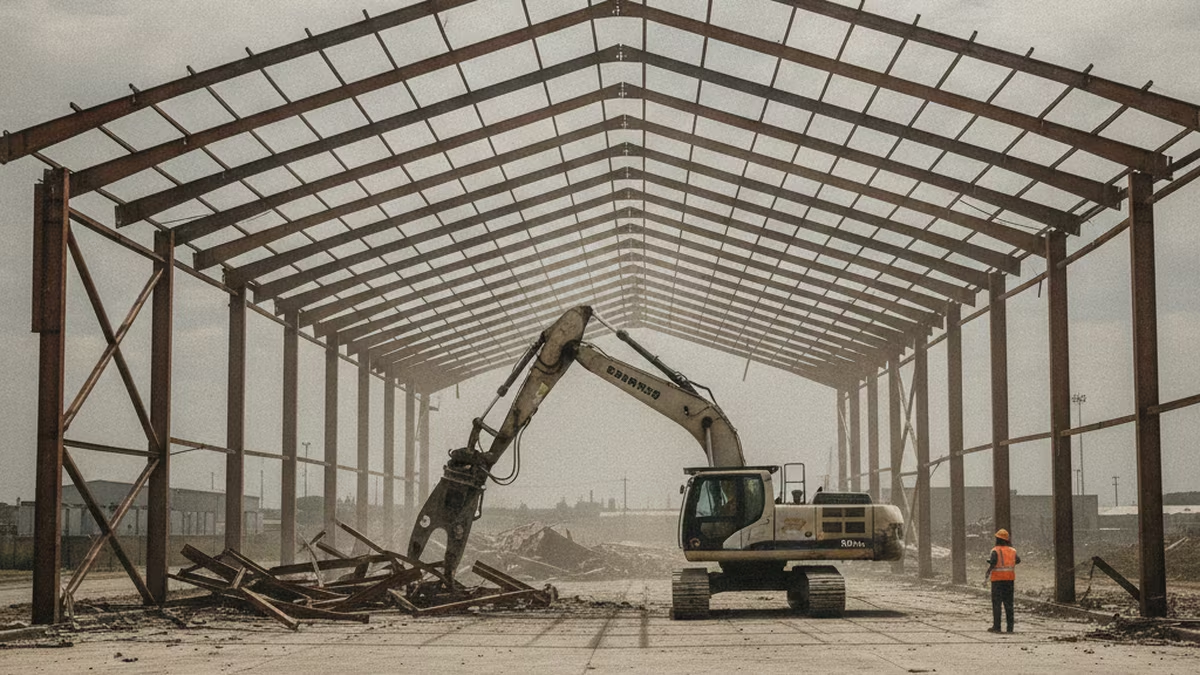
Structure types and how each comes down
| Structure | Frame | Approach | Salvage position |
|---|---|---|---|
| Warehouse, factory shed | Steel portal frame | Strip cladding, dismantle frame in reverse erection order | High — credited against the quote |
| Multi-storey office | Reinforced concrete | Soft strip, then top-down mechanical with rebar shear | Low — concrete crushed for fill |
| Retail unit, shop | Masonry or frame | Soft strip to shell, structure only where the scope calls for it | Moderate — fittings and services |
| Silo | Concrete or steel | Engineered top-down sequence, exclusion zone | Steel high, concrete none |
| Tank, vessel | Steel | Purge and certify clean, then cut and section | High, subject to prior contents |
| Hardstand, apron | Reinforced concrete | Breaker plus shear, crushed on site | Crushed material reused as fill |
Working on an occupied site
Commercial demolition frequently runs while part of the property trades. Three controls make that workable.
- Physical separation. Hoarding, dust screening and a hard boundary between the works and the trading area.
- Programme separation. Noisy and dust-generating work scheduled outside trading hours, including night and weekend shifts.
- Service continuity. Power, water and drainage serving the retained portion isolated and re-routed before demolition starts, not during it.
Phased handover suits a tenant reinstatement or a partial redevelopment. The demolished portion is cleared, made safe and handed back in defined sections rather than as a single completion.
Steel structures and the salvage credit
Structural steel carries genuine scrap value, and that value belongs in the quote rather than to the contractor. A steel-framed warehouse is dismantled rather than crushed, with sections cut to transportable lengths and sorted by grade. Sound roof sheeting, purlins and cladding resell as second-hand building material. Steel structure dismantling covers the sequence.
Regulatory load on a commercial demolition
- Demolition permit from the City of Cape Town, applied for by the property owner, with a waste management plan.
- Health and safety file under the Occupational Health and Safety Act 85 of 1993 and the Construction Regulations 2014, with a demolition method statement and appointed supervision.
- Asbestos survey before work starts. Industrial roof sheeting of a certain age is a known asbestos risk.
- Waste manifest and disposal records at a licensed landfill.
- Heritage check where the structure exceeds 60 years, which catches Woodstock, Salt River and City Bowl industrial stock.
Frequently asked questions
Can demolition happen while the rest of the building stays open?
Yes. Occupied-site demolition runs behind hoarding and dust screening, with noisy work scheduled outside trading hours. Services feeding the retained portion are isolated and re-routed before demolition starts rather than during it. The trading area and the works are separated both physically and by programme.
Does scrap steel reduce the demolition price?
Yes. Structural steel, roof sheeting and purlins carry scrap and resale value, and that value is credited against the quote rather than retained by the contractor. A steel-framed warehouse therefore prices lower per square metre than an equivalent concrete-framed structure. See reclaimed building materials.
How is a silo demolished safely?
A silo comes down top-down under an engineered sequence with an exclusion zone sized to the structure height. The contents are removed and the structure certified empty before cutting starts. Steel silos are cut and sectioned. Concrete silos are broken progressively from the top.
Do you demolish tanks that held fuel or chemicals?
Yes. Tank demolition begins with purging and a clean certificate confirming the vessel is free of residue and vapour. Cutting a vessel that has not been certified clean is a fire and health exposure. The prior contents determine the cleaning method and the disposal route for the residue.
Who applies for the demolition permit on a commercial property?
The property owner is the eligible applicant, not the tenant and not the contractor. A company-owned property requires a company resolution with the application. Cape Demolition Co prepares and submits the application on the owner's behalf as part of the quote.