Steel Structure Dismantling in Cape Town: Portal Frames, Roof Sheeting, Tanks and Palisade
Steel is dismantled rather than demolished, in reverse erection order, because every section recovered carries scrap or resale value. That value is credited against the quote. A steel-framed warehouse therefore prices lower per square metre than an equivalent masonry or concrete structure, and on large frames the salvage can offset a substantial part of the job.
Free site visit and written quote anywhere in greater Cape Town.
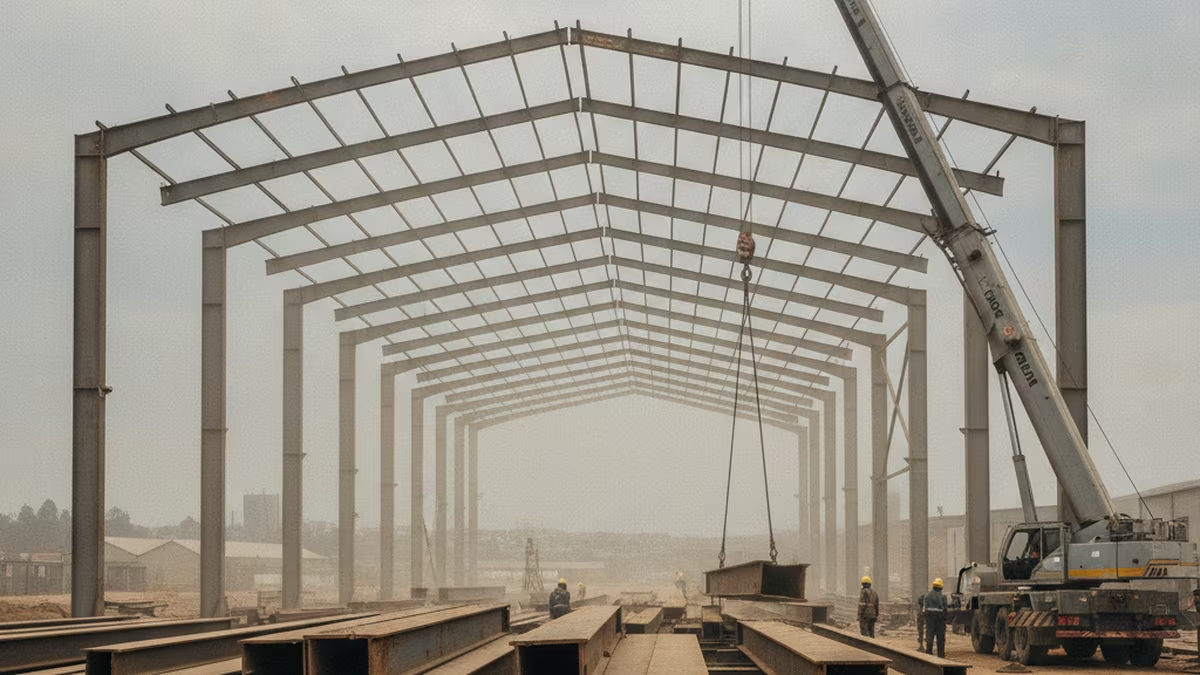
Reverse erection order
A steel frame is stable because its members brace each other. Cutting members out of sequence removes that bracing and drops the frame unpredictably. Dismantling therefore runs backwards through the way it was built.
- Cladding and roof sheeting. Unscrewed and lifted off, sheet by sheet.
- Purlins and girts. The secondary steel that carries the sheeting.
- Bracing. Removed only as each bay is supported or taken down.
- Rafters. Slung, cut at the apex and haunches, lowered.
- Columns. Cut at the base plate last, with the crane taking the weight.
- Base plates and holding-down bolts. Cut or excavated from the foundation.
A frame is never dropped by cutting columns while the roof structure is still connected. Every stage is supported before the members carrying it are released.
What the steel is worth
| Element | Condition | Destination |
|---|---|---|
| Portal frame sections | Sound | Resold for re-erection, or cut to scrap by grade |
| Roof sheeting — IBR, corrugated | Unpunctured | Second-hand building material |
| Purlins and girts | Sound | Resold, widely reused on farm structures |
| Palisade fencing | Straight, uncut | Resold by the panel |
| Reinforcing bar from concrete | Any | Scrap by weight |
| Tanks and vessels | Certified clean | Scrap by weight |
Sound roof sheeting and purlins carry more value resold than scrapped, so they are removed carefully rather than cut.
Cutting method
Oxy-fuel cutting suits thick sections and site conditions where power is limited. A hydraulic shear on an excavator cuts faster and produces no flame, which matters where residual flammable material is present. Hot work of any kind requires a fire watch, a clear zone below the cut, and confirmation that nothing combustible sits behind the member being cut.
Tanks and vessels
A tank that held fuel, oil or chemicals is purged and certified clean before any cutting begins. Vapour left in a vessel ignites from a cutting flame, and that is the single most dangerous operation in steel demolition. The prior contents determine the cleaning method and the disposal route for the residue, both of which are established before the tank is priced.
Frequently asked questions
Does steel salvage reduce what I pay for demolition?
Yes. Recovered structural steel, roof sheeting and purlins carry scrap and resale value, and that value is credited against the quote rather than kept by the contractor. On a large portal-frame building the credit offsets a substantial share of the demolition cost. The credit is shown as a separate line on the quote.
Can a steel building be dismantled for re-erection somewhere else?
Yes. A frame in sound condition is dismantled with bolted connections released rather than cut, members marked against the erection drawings, and sections loaded in build order. Dismantling for re-erection costs more in labour than cutting for scrap and returns far more value if the frame is sound.
How long does it take to dismantle a warehouse?
A single-bay steel shed of 200 to 400 square metres runs 3 to 6 days. A multi-bay warehouse of several thousand square metres runs 3 to 8 weeks depending on height, crane access and whether the frame is being recovered or scrapped. Cladding removal is roughly a third of the programme.
Is roof sheeting on an old industrial building asbestos?
Sheeting on older industrial buildings is a known asbestos risk in Cape Town and is tested before removal rather than assumed safe. Confirmed asbestos sheeting is removed by a registered asbestos contractor under the Asbestos Abatement Regulations, 2020, not by the demolition crew.
Can you cut a tank that held fuel?
Yes, but only after it has been purged and certified free of residue and vapour. Cutting an uncertified vessel is a fire and explosion exposure. Purging, cleaning and the residue disposal route are established and priced before any cutting is scheduled.