Demolition Equipment: Machines, Attachments and What Each One Does
A demolition machine is a carrier plus an attachment, and the attachment does the work. The carrier is selected by access and reach; the attachment by material. A 5-tonne excavator that fits through a side gate is more useful on a suburban Cape Town demolition than a 30-tonne machine that cannot get past the house.
Free site visit and written quote anywhere in greater Cape Town.
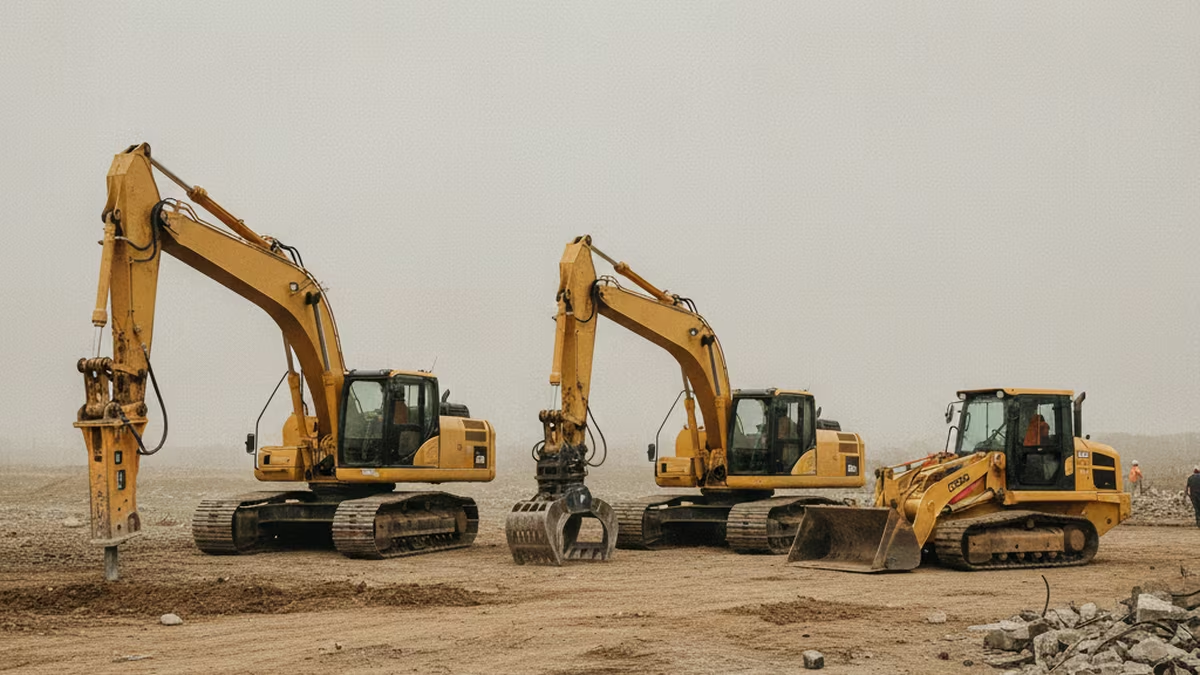
Carriers by class
| Class | Weight | Access | Typical use |
|---|---|---|---|
| Micro | 1–2 t | Through a standard doorway | Interior strip-out, internal slabs |
| Compact | 3–8 t | Through a side gate or passage | Pools, outbuildings, suburban back gardens |
| Mid-size | 13–20 t | Needs a driveway or open frontage | Houses, boundary walls, slabs |
| Large | 21–35 t | Open site access | Commercial, industrial, heavy concrete |
| High-reach | 30 t plus, long boom | Prepared level platform | Multi-storey structures |
Attachments by material
| Attachment | Material | Function |
|---|---|---|
| Hydraulic breaker | Concrete, masonry, rock | Fractures by percussive impact |
| Pulveriser | Reinforced concrete | Crushes concrete and separates reinforcement |
| Shear | Steel | Cuts sections without a flame |
| Sorting grapple | Mixed debris | Sorts streams and loads |
| Bucket | Soil, fill, rubble | Excavation, backfill, load-out |
| Compaction plate | Backfill | Compacts in layers during reinstatement |
| Mobile crusher | Clean concrete | Produces granular fill on site |
Support plant
- Tipper trucks for load-out, sheeted before leaving site
- Skips where a tipper cannot access or the tonnage is small
- Dust suppression — misting units at the breaker head rather than open hosing, given Cape Town water restrictions
- Scaffold for hand demolition of chimneys and party walls
- Props and needles for temporary support in selective demolition
- Debris netting and screening on boundaries
Machine class is confirmed at the site visit once access has been measured, because the largest machine that can reach the structure is almost always the cheapest way to demolish it. See demolition costs.
Frequently asked questions
What machine is used to demolish a house?
A mid-size tracked excavator of 13 to 20 tonnes with a hydraulic breaker or pulveriser handles most house demolitions, provided it can reach the structure. Access decides the class before the structure does: a compact 3 to 8 tonne machine that fits through a side gate is more useful than a large machine that cannot get past the house.
What is the difference between a breaker and a pulveriser?
A hydraulic breaker fractures concrete and masonry by percussive impact, driving a point into the material. A pulveriser crushes concrete between jaws and separates the reinforcement from it in one operation, which suits reinforced concrete where the bar has to be recovered and the concrete crushed.
Can a machine reach a back garden pool?
Yes, on most sites. A compact excavator of 3 to 8 tonnes passes through most side gates and passages. Where nothing fits, the pool is broken by hand and the material barrowed out, which adds several days and is the single largest factor in a pool removal price. Access is measured at the site visit.
How is dust suppressed on a demolition site in Cape Town?
Misting units at the breaker head suppress dust where it is generated using a fraction of the water an open hose needs, which matters under Cape Town water restrictions. The drop zone is wetted immediately before the drop, boundary netting catches airborne dust mechanically, and loads are damped and sheeted before leaving site.
What size machine will fit down my driveway?
A compact excavator of 3 to 8 tonnes passes through most side gates and passages, and a mid-size 13 to 20 tonne machine needs a driveway or open frontage. Access is measured at the site visit rather than estimated, because the largest machine that can reach the structure is almost always the cheapest way to demolish it.