Vibracrete and Boundary Wall Removal in Cape Town: Panels, Posts and Footings
Vibracrete is lifted, not broken. Precast concrete panels slide out of the slotted vertical posts they sit in, which means a wall comes down intact and the panels keep their resale value. Breaking a vibracrete wall with a machine converts a saleable asset into disposal tonnage and costs the owner twice.
Free site visit and written quote anywhere in greater Cape Town.
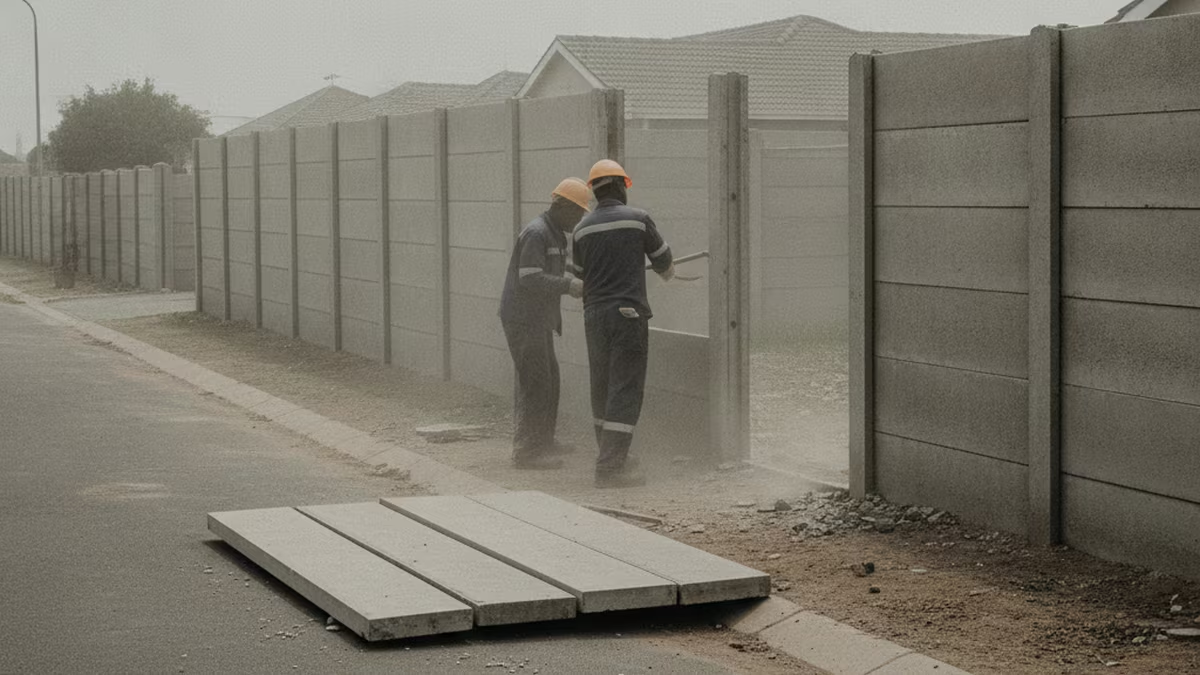
How a vibracrete wall comes apart
- Top panel first. Panels stack in the post slots under their own weight, so the top one lifts free without disturbing the rest.
- Work down the bay. Each panel lifts vertically clear of the slot and stacks flat on the ground.
- Posts last. With the bays empty, posts stand free and are excavated from their concrete footings.
- Footings out. Post footings are dug rather than snapped at ground level, so the line is clear for whatever replaces the wall.
- Backfill and compact. Post holes filled and compacted, panels sorted for resale or disposal.
A 2 m panel weighs enough that two people handle it awkwardly and a third is needed on a high wall. Machine assistance speeds a long run considerably, and a compact excavator with slings does the lifting on runs over about 30 m.
Wall types and method
| Wall type | Method | Recovery |
|---|---|---|
| Vibracrete — precast panel and slotted post | Lifted panel by panel | Panels and posts resell when sound |
| Precast decorative panel | Lifted, handled carefully | High where the pattern is still available |
| Brick or block boundary wall | Machine or hand demolition, top-down | Face brick recoverable by hand |
| Palisade fencing | Unbolted or cut at the base | Panels resell; posts scrap |
| Retaining boundary wall | Sequenced, ground retained first | Crushed |
A boundary wall on a retaining line is not a boundary wall. Where the ground on one side sits materially higher than the other, the wall is retaining soil and removing it without addressing the bank causes a slump. See concrete demolition for the sequence.
The boundary itself
A boundary wall usually sits on or near the cadastral boundary, and often it is jointly owned with the neighbour. Three checks happen before removal is quoted: who owns the wall, whether the neighbour has consented, and whether the wall provides any lateral support to a neighbouring structure or bank. A wall that supports a neighbour's ground cannot simply be removed. Vibracrete boundary walls are near-universal across the Cape Flats and the northern suburbs, and shared ownership is the norm rather than the exception.
Frequently asked questions
Can vibracrete panels be reused after removal?
Yes, where they come out intact. Panels lift vertically out of the slotted posts without being broken, and sound panels resell as second-hand building material or go straight back up on a new line. Panels broken out by machine have no resale value and become disposal tonnage.
How long does it take to remove a boundary wall?
A vibracrete run of 20 to 30 m comes down in a day including post excavation and backfill. A 60 m run with machine assistance runs 2 days. Brick boundary walls take longer per metre because the material is broken and loaded rather than lifted.
Do the posts and footings come out too?
Yes. Posts are excavated from their concrete footings rather than snapped off at ground level, and the holes are backfilled and compacted. A footing left in the ground obstructs the foundation of any replacement wall and any services routed along the boundary.
Do I need my neighbour's permission to remove a boundary wall?
Yes, where the wall is jointly owned. A boundary wall is frequently jointly owned, and ownership is established before removal is quoted. A wall providing lateral support to a neighbouring structure or bank cannot be removed without addressing that support. Consent and ownership are checked at the site visit rather than assumed.
Is a permit needed to remove a boundary wall?
No, in the normal case. Removal of a freestanding boundary wall is minor work rather than a permitted demolition, and a wall forming part of a structure or providing retention is treated differently. The position is confirmed against the City of Cape Town requirements at the site visit. See demolition permit.